-
Module 4: Vitamins & Antioxidants
In this session, you will about Vitamins and Antioxidants and complete a number of interactive tasks to refresh your knowledge of the topic.
At the end of the session you will be able to:
- Describe what vitamins are and why they are important.
- Describe the differences between water and fat-soluble vitamins.
- Identify the major functions, deficiency & toxicity symptoms, and main food sources for each vitamin.
- Define free radicals, antioxidants & phytochemicals.
- Explain how antioxidants work in the body and how they might defend against chronic diseases.
What are vitamins?
Vitamins are organic molecules and essential nutrients that are required in tiny amounts (micronutrients). They are needed in microgram/milligram amounts. Vitamin precursors or provitamins are the inactive forms of some vitamins in foods and can be converted to the active form of the vitamin in the body. Vitamins are individual units and are not linked together. Vitamins do not yield energy when broken down. Certain vitamins assist the enzymes that release energy from the macronutrients.
Bioavailability
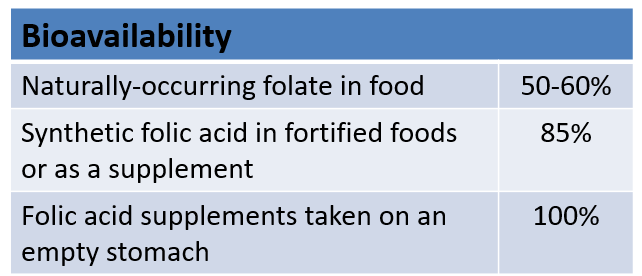
Bioavailability refers to the rate and extent that a nutrient is absorbed and used. The bioavailability of vitamins can be affected by the following factors:
- Source of nutrient (synthetic, fortified or naturally occurring)
- Other foods consumed at the same time
- Method of food preparation
- Efficiency of digestion and time of transit through the gastrointestinal tract
- Previous nutrient intake & nutritional status
Water soluble versus fat soluble
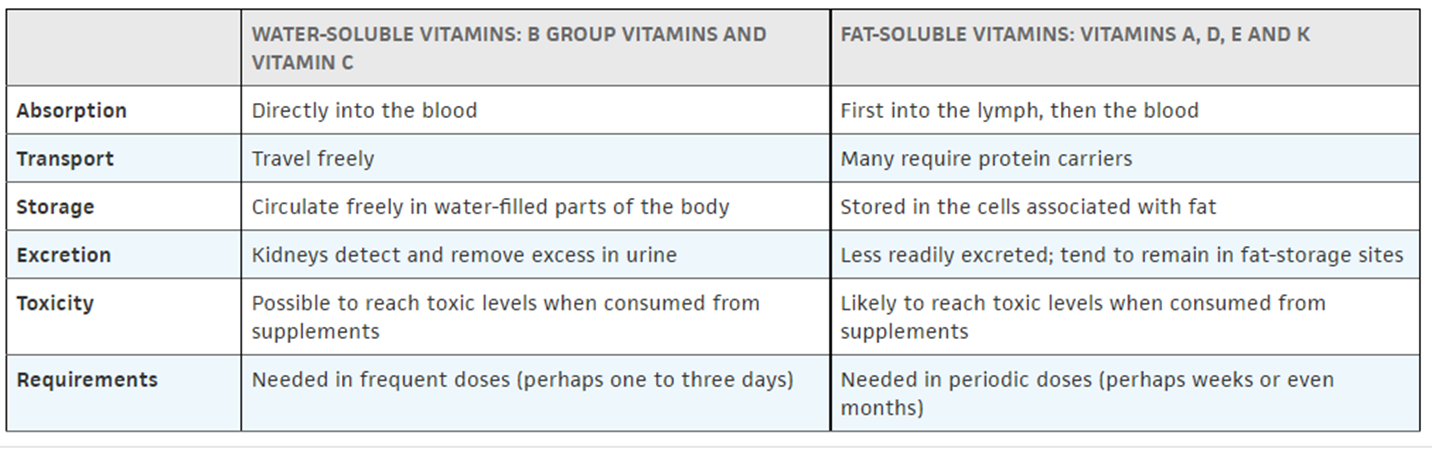
Vitamins are divided into 2 groups depending on solubility.
1) Water-soluble vitamins (hydrophilic): B Vitamins: Thiamine, Riboflavin, Niacin, Biotin, Pantothenic acid, Vitamin B6, Folate, Vitamin B12 and Vitamin C
2) Fat-soluble vitamins (hydrophobic): Vitamin A, Vitamin D, Vitamin E, Vitamin K
B Vitamins
The B vitamins include: Thiamin (Vitamin B1), Riboflavin (Vitamin B2), Niacin (Vitamin B3), Pantothenic acid (Vitamin B5), Pyridoxine (Vitamin B6), Biotin (Vitamin B7), Folate (Vitamin B9),
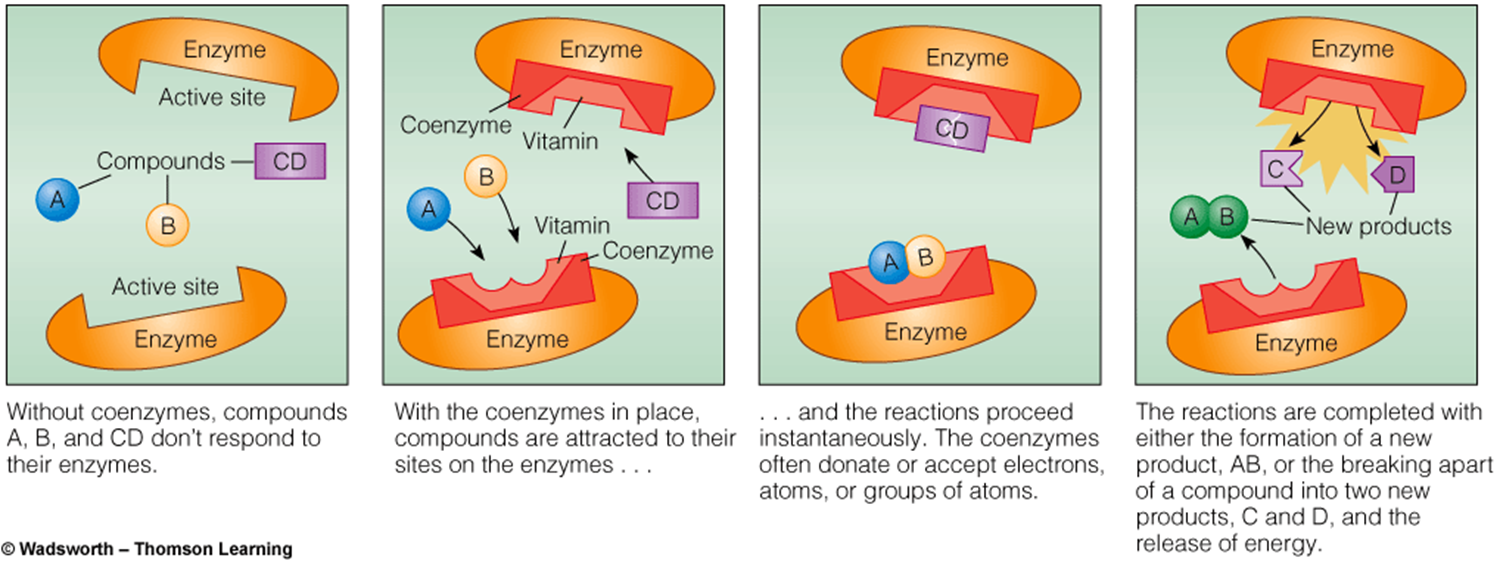
Vitamin B12 (cobalamin).Most of the B Vitamins form parts of coenzymes involved in:
- Energy metabolism
- Amino acid and fatty acid metabolism
- DNA synthesis and the growth of new cells
Many B vitamins act as coenzymes and allow a chemical reaction to occur.

B Vitamin Deficiencies and Toxicities
Deficiencies in B vitamins rarely occur in isolation but specific deficiencies lead to skin lesions, anaemia and neurological disturbances. Two common symptoms include glossitis (inflammation of the tongue) and cheilosis (reddened lips with cracks at the corner of the mouth). Toxicities are unlikely to occur from food alone but can occur if large doses of supplements are consumed.
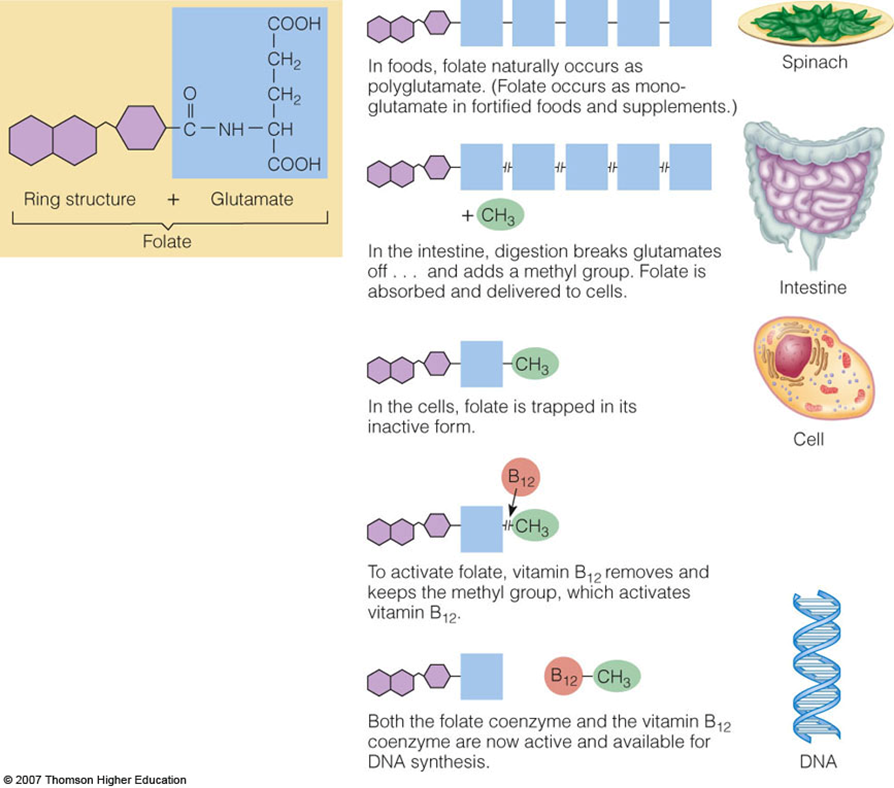
Folate: can be found in different forms. Naturally occurring folate is found in food as polyglutamate. Folic acid or pteroylmono-glutamic acid is the most common synthetic form of folate and is used to fortify foods and is food in supplements. Dietary folate refers to the total folate consumed in the diet. Sources include fortified grains, leafy green vegetables, legumes, seeds and liver. Folate is easily destroyed by heat and oxygen.
Folate transfers one-carbon compounds during the metabolism of nucleotides and amino acids and this action is essential for:
- DNA synthesis - folate is needed to form thymidylate for DNA synthesis which is required for new cell formation and cell division
- Activation of B12 - vitamin B12 removes and keeps the methyl group from folate
- Methylation of homocysteine to methionine
Vitamin B12
Vitamin B12 and folate depend on each other for activation. They are both required for synthesis of DNA and RNA. Vitamin B12 maintains the sheath that surrounds nerve fibres and promotes their normal growth. Significant food sources for vitamin B12 include animal products (meat, fish, poultry, milk, cheese, eggs), fortified cereals and plant-based milk. Vitamin B12 is easily destroyed by microwave cooking.
In the stomach hydrochloric acid (HCl) and pespin release B12 from the proteins. The stomach secretes a protein called Intrinsic Factor (IF) which binds B12 as it passes into the small intestine. This newly formed molecule is recognised by receptors at the end of the small intestine. Intrinsic factor is degraded and B12 is gradually absorbed into the bloodstream. B12 is transported by specific binding proteins.Deficiency results in pernicious anaemia (large but immature red blood cells), sore tongue, loss of appetite, fatigue, depression and degeneration of peripheral nerves leading to paralysis. Causes of deficiency include malabsorption such as atrophic gastritis. Vegans can also be at risk of deficiency.
Thiamin (Vitamin B1)
Thiamin forms part of the coenzyme thiamin pyrophosphate and is used in energy metabolism. Deficiencies in thiamin result in beriberi or Wernicke-Korsakoff syndrome. Deficiency symptoms include enlarged heart, cardiac failure, muscular weakness, poor short-term memory, confusion, irritability, anorexia and weight loss.
Riboflavin (Vitamin B2)
Part of the coenzymes flavin mononucleotide and flavin adenine dinucleotide and used in energy metabolism. Found in milk products (yoghurt, cheese), wholegrains, fortified or enriched grain products and liver. Easily destroyed by ultraviolet light and irradiation. Deficiency results in ariboflavinosis. Deficiency symptoms include sore throat, cracks and redness at corners of the mouth, purplish red tongue, and inflammation characterised by skin lesions.
Niacin (Vitamin B3)
Part of coenzyme NAD and NADP and involved in energy metabolism. Found in milk, eggs, meat, poultry, fish, wholegrains, fortified and enriched grain products, nuts and all protein-containing foods. Deficiency results in pellagra. Deficiency symptoms include diarrhoea, abdominal pain, vomiting, glossitis, depression, fatigue, loss of memory and skin lesions. Toxicity symptoms include painful flush, hives, rash, nausea, vomiting, liver damage and impaired glucose tolerance.
Pyridoxine (Vitamin B6)
Vitamin B6 is part of the coenzymes pyridoxal phosphate and pyridoxamine phosphate used in amino acid and fatty acid metabolism; helps to convert tryptophan to niacin and serotonin; helps to make red blood cells. Found in meats, fish, poultry, potatoes and other starchy vegetables, legumes, non-citrus fruits, fortified cereals, liver and soy products. It is easily destroyed by heat. Deficiency symptoms include scaly dermatitis, anaemia, depression, confusion and convulsions. Toxicity symptoms include depression, fatigue, irritability, headaches, nerve damage and skin lesions.
Side Block Position

UofA Testing Site
Section outline
Top Block Position
Bottom Block Position